From Economic Growth to Shared Prosperity: Tackling Multidimensional Poverty in Serbia
21 October 2025
From Economic Growth to Shared Prosperity: Tackling Multidimensional Poverty in Serbia

Belgrade, 21 October 2025 - To mark the International Day for the Eradication of Poverty, the United Nations in Serbia and the Delegation of the European Union to Serbia hosted a high-level event at the EU House in Belgrade “From Economic Growth to Shared Prosperity – Tackling Multidimensional Poverty in Serbia”. The event brought together representatives from the Government of Serbia, the EU Delegation, UN agencies and international financial institutions to explore how Serbia can ensure that economic growth benefits everyone, especially the most vulnerable.
Tackling poverty must remain at the heart of Serbia’s development priorities. Sustained investments in people are key to ensuring that no one is left behind as the country advances economically.
“Reducing poverty is about building systems that protect people and create opportunity. Serbia has come a long way on this path, and through our partnership with the European Union we are helping make sure that growth and inclusion advance together — so that progress is felt in every community,” said Matilde Mordt, United Nations Resident Coordinator in Serbia.
Reducing poverty and inequality calls for joint commitment, smart policies, and inclusive growth. The EU remains a strong partner to Serbia and the United Nations in building a society where prosperity is shared by all.
“A society is only as strong as its most vulnerable members. Economic growth must go hand in hand with improving the daily lives of all people, especially those most at risk of poverty. The European Union has been a key partner in Serbia’s efforts to reduce poverty and promote social inclusion. Since 2014, the EU has invested over €91 million to strengthen social protection, education, and employment opportunities, with a focus on marginalized groups. The 2024 Growth Plan for the Western Balkans will unlock €1.6 billion for Serbia, with reforms centred on employment, skills, energy poverty, and a just transition,” stated Plamena Halacheva, Deputy Head of the EU Delegation to Serbia.
Sustainable development hinges on investments in human capital. Access to quality education, healthcare, and social protection is fundamental to breaking the cycle of poverty and fostering inclusive growth.
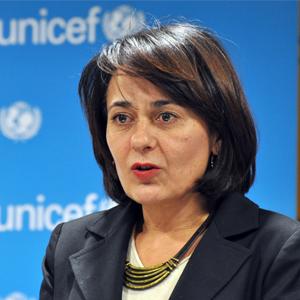
“In challenging times, protecting and expanding investments in human capital matters most. The return of such investments is real. Well-designed and sustained social spending does more than alleviate hardship. It strengthens people, builds resilience, and drives long-term growth,” said Deyana Kostadinova, UNICEF Representative and Co-Chair of the UN Results Group on Human Capital and Social Inclusion.
Poverty is multifaceted and extends beyond income disparities. Access to essential services and opportunities to participate fully in social and economic life are crucial components of poverty reduction.
“By enabling women's full economic participation and investing in healthy and active ageing, we are not just strengthening families today- we are fundamentally reducing poverty and building a resilient future for all generations in Serbia," stated Borka Jeremic, Head of Office of United Nations Population Fund (UNFPA) in Serbia and Co-Chair of the UN Results Group on Human Capital and Social Inclusion.
Economic and fiscal policies play a crucial role in reducing inequality and ensuring that social investments reach those who need them most.
“Our economic policy is directed towards improving the quality of life for our citizens. In line with this, we are continuously increasing the minimum wage, pensions, and salaries in the public sector. Unemployment was reduced to 8.6% in 2024, and employment has reached record levels, contributing to a widespread improvement in living standards. In 2024, real GDP grew by around 3.9%, one of the higher growth rates in Europe. The social component of the budget has been strengthened through better targeting social assistance programmes and increased allocations for health care and education. We strive to build a society in which everyone has the opportunity to prosper,” said Marko Jovanovic State Secretary at the Ministry of Finance.
At the heart of poverty reduction is the principle that everyone deserves access to support systems and opportunities to live with dignity.
“Sustainable employment growth is based on knowledge and dignified work, which contributes to a higher-quality labour market and a reduction in social inequalities. A key role in this lies in cross-sectoral cooperation and the alignment of education, economic development, and social protection policies. We particularly emphasise the importance of the Youth Guarantee, which is being implemented in cooperation with the European Union as a pilot project in Krusevac, Nis, and Sremska Mitrovica, covering 20 local governments. This project demonstrates how crucial institutional cooperation is in addressing employment and social inclusion issues,” said Djordje Todorov, State Secretary at the Ministry of Labour, Employment, Veteran and Social Affairs.
Smarter investments in social sectors, particularly those benefiting vulnerable and marginalized groups, can drive more inclusive and sustainable growth. Reducing poverty goes beyond income; it requires strengthening the systems people rely on every day and expanding access to social protection, healthcare, education, employment, and energy-efficient housing to ensure that no one is left behind.
The event closed with a clear message: poverty in Serbia remains a challenge, but it can be overcome if addressed with priority, adequate spending, and a sustained commitment to invest in people.



UN entities involved in this initiative
Goals we are supporting through this initiative